
Real-world survey shows Austedo eases chorea’s impact in Huntington’s
Benefits reported with both original and extended-release formulations
Written by |
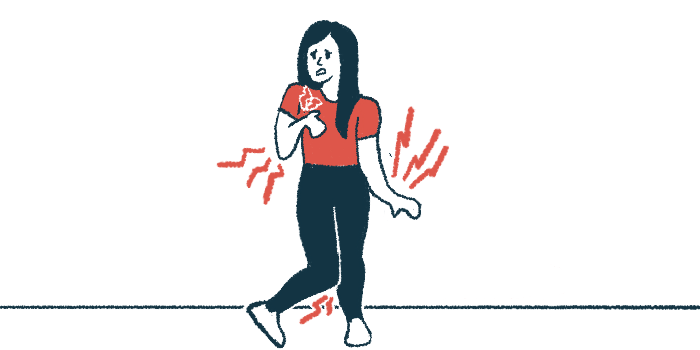
The approved oral medication Austedo (deutetrabenazine) or its extended-release formulation Austedo XR can help reduce the impact of Huntington’s disease-associated chorea, or involuntary movements, on patients’ daily activities and social interactions, while also easing the emotional and social burden on caregivers.
Those are the findings of a U.S. real-world survey conducted in collaboration with the Huntington Study Group, a cooperative therapeutic research organization launched more than three decades ago to advance treatments for Huntington’s. The survey results were presented at this year’s Advanced Therapeutics in Movement & Related Disorders Congress, held June 4-8 in Washington, D.C., and announced by Teva Pharmaceuticals, which markets the therapies, in a company press release.
The company noted that nearly three-quarters of the patients surveyed experienced improvements — an easing of their chorea movements, as assessed on a commonly used scale — after starting treatment with Austedo or Austedo XR. A slightly greater proportion of caregivers also reported benefits, specifically “improvements in goals related to their social life, such as going out on their own and [better] emotional [well-being], including reduced guilt, stress and emotional burden,” per the release.
“These real-world findings demonstrate the importance of effective chorea management to aid in preserving independence longer and alleviating those impacts for both patients and caregivers,” said Daniel Claassen, MD, a professor of neurology at Vanderbilt University Medical Center in Tennessee and CEO of the Huntington Study Group, who served as principal investigator of the study.

Chorea, the uncontrolled, dance-like movements that mark Huntington’s, can interfere with everyday activities such as walking, eating, dressing, and speaking. The often-debilitating symptom is thought to occur when nerve cells release excessive amounts of dopamine, a chemical messenger that triggers muscle cells to contract.
According to Claasen, “Huntington’s disease chorea extends beyond its physical symptoms, disrupting patients’ emotional [well-being], social functioning and sense of self, while also placing immense strain on caregivers.”
Both patients, caregivers surveyed on chorea’s impact
Austedo and Austedo XR are oral therapies that work by blocking the activity of VMAT2, a protein involved in the release of dopamine from nerve cells. By blocking VMAT2, the therapy aims to reduce abnormal muscle contractions associated with chorea.
The original formulation, Austedo, was approved in the U.S. in 2017 to treat adults with Huntington’s disease-associated chorea. That approval was supported by data from the Phase 3 First-HD clinical trial (NCT01795859), which showed that Austedo, taken twice daily, outperformed a placebo at easing chorea severity after three months.
Austedo XR, approved in the U.S. in 2023 for the same indication, contains the same active ingredient as Austedo but is taken once daily. Austedo XR was approved based on clinical trial data showing the once-daily formulation was therapeutically equivalent to the original version.
Now, to better understand the impact of Huntington’s-associated chorea on daily life and the perceived benefits of treatment, the researchers first surveyed adults with the condition and their adult caregivers.
Patients completed online questionnaires through the Huntington Study Group’s myHDstory platform about the impact of chorea on daily functioning, emotional well-being, and treatment goals. Caregivers of affected people completed a separate online survey assessing how their care recipient’s chorea affected their own daily functioning and quality of life.

Austedo and Austedo XR found to ease symptom severity
Survey responses showed that chorea had a substantial impact on multiple aspects of daily life for both patients and caregivers. Depending on the measure assessed, 67% to 84% of patients said chorea interfered with their social lives, emotional well-being, daily activities, and work or recreational pursuits.
Caregivers likewise reported a considerable burden, with 71% to 84% saying caregiving affected their emotional well-being and social lives, and 76% to 83% reporting disruptions to daily activities and recreational pursuits.
Patients also identified goals they hoped treatment would help them achieve, with many focusing on improving daily activities and social interactions. Caregivers similarly reported goals centered on their own well-being.
“What we are seeing reinforced from these real-world data is how deeply Huntington’s disease chorea affects patients — physically, emotionally and in their ability to function day-to-day — and the strain it can place on their care partners,” said Eric Hughes, MD, PhD, executive vice president, global R&D and chief medical officer at Teva.
Participants treated with Austedo or Austedo XR also completed additional questionnaires about changes in chorea burden after starting treatment. One such measure was the Patient Global Impression of Change (PGIC) scale.
Data from the PGIC scale showed that 74% of surveyed patients reported that chorea severity had lessened after starting treatment. As a result, more than 85% said treatment helped them make progress toward goals related to daily activities, such as dressing, walking, and eating, as well as social activities involving friends and family.
Most caregivers (77%) of patients treated with Austedo or Austedo XR also reported gains in their social lives, including going out on their own, and in emotional well-being, with reduced feelings of guilt and stress.
According to Teva, this the first real-world study assessing the impact of chorea on patients’ and caregivers’ quality of life.
“We are proud to see Austedo and Austedo XR delivering such meaningful improvement for patients and making a real difference in the lives of those impacted,” Hughes said.




Leave a comment
Fill in the required fields to post. Your email address will not be published.