
How will Huntington’s progression change interactions with my wife?
Part of what draws people to Jill is the attention she gives them
Written by |
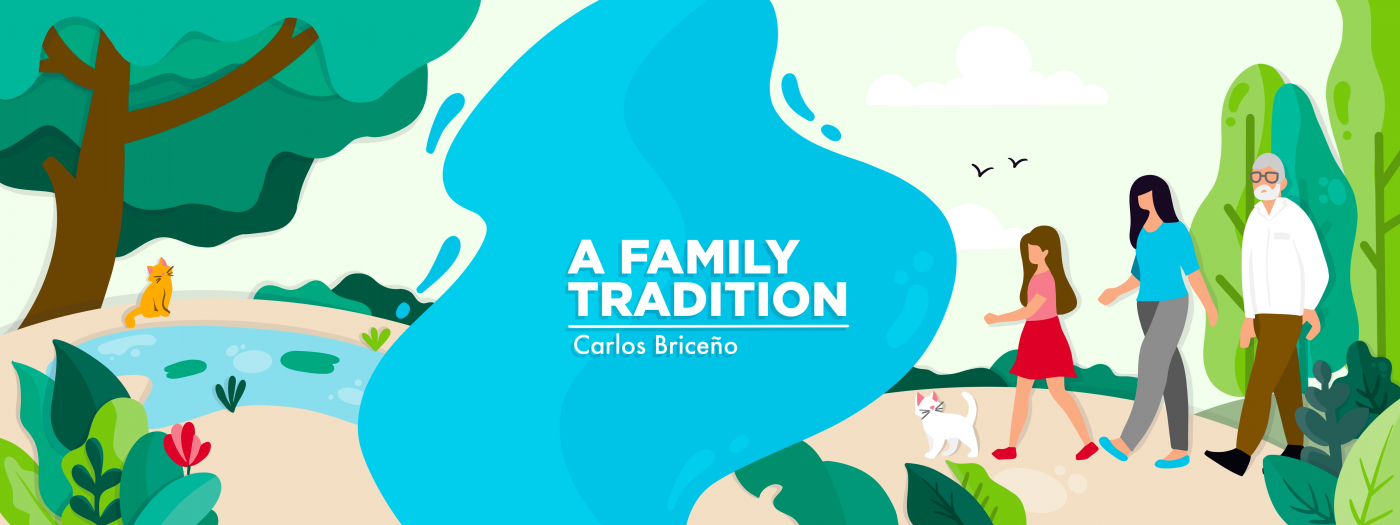
My wife, Jill, who is gene-positive with Huntington’s disease (HD), can be waiting in line at a grocery store, sitting on a park bench, or picking up a prescription, and the person next to her will start confessing something they’ve never said out loud before. They might talk about their marriages, children, jobs they hate, or fears that keep them up at night. Often, they’ll end with, “I don’t know why I just told you all that.”
I know why: Jill has a way of making people feel safe.
Part of what draws people to Jill is her attention. When she talks to someone, she’s not half‑listening while scrolling through her phone. She’ll lean in, make eye contact, and reflect back what she hears in small sentences. She might say, “That sounds really hard,” or, “You must’ve been so proud.” She doesn’t rush to fix anything, instead letting silence sit for a moment. That’s when the deeper truth tends to slip out.
Before HD entered our lives, this ability was just a small part of her, like her love of our puppy and nail polish. Recently, though, Jill began to wonder if this strange gift would survive the changes in her brain and body. Would people still open up to her when her movements became more obvious, when her speech sometimes slowed, or when she couldn’t always find the word she wanted? Or would they look past her, assuming she was too fragile, distracted, or “sick” to carry their stories?

What it means to carry heavy news
HD complicates things. Noise and crowds overwhelm her more easily now. On bad days, following a conversation takes extra concentration. She’ll wonder, “Will the world only see me as a person who has a disease?”
From where I sit, HD has changed the logistics, but not the core of who she is. Yes, our radius is smaller. We do fewer big events and more short outings. Jill often needs breaks from overstimulating places, so chance encounters now happen more at the dog park or the grocery store than at crowded parties.
But even within those limits, the old pattern keeps showing up. A woman at the vet’s office will suddenly share how scared she is about her aging cat. A barista will tell Jill about a grandparent’s dementia. A neighbor on a walk will confide that they’re caring for a sick parent. Jill will listen. Her body might move in ways she can’t control, and her speech might be a little slower, but her attention is as steady as ever.
If anything, Jill’s vulnerability has deepened the connection. People who know about her diagnosis often say, “You have so much going on. I shouldn’t be dumping this on you.” Jill will respond with something simple like, “You are not dumping. You’re just telling me your truth.” She understands what it means to carry heavy news. That knowledge sits in her eyes.
Still, her question is real. There may come a time when speech is harder or when she can’t easily shape long responses. She worries that, when that happens, the world will talk around her instead of to her, and that the stream of confessions will dry up — not because people no longer need to be heard, but because they don’t recognize her as someone who can hear them.
We’ve talked about ways to protect that part of her as the disease progresses. One is by deliberately creating spaces where her listening is still central, such as smaller gatherings or one‑on‑one visits. Another is by letting people know that even if her words come more slowly, she is still present. Sometimes a hand on someone’s arm, a nod, or a written note afterward can say, “I was with you,” even when speech does not cooperate.
I’ve also had to mind my own instinct to jump in. As her caregiver and husband, I sometimes rush to answer for her, to fill in details, to “help” the conversation along. I’m learning that, unless she asks, that help can accidentally step on the very thing she is afraid of losing. When I stay quiet a beat longer, she often gets there on her own. The person across from her sees not just someone with a disease, but the same Jill who has always been a safe place to land.
HD will change many things about our lives. It has already rearranged our schedules and our energy. But the part of Jill that invites honesty from strangers is rooted in something HD can’t touch: her willingness to see people as they are, without judgment, and to stand in that truth with them for a moment. Some people may look away from difference, but others will still see what they always have: a woman whose eyes say, “You can tell me.”
Note: Huntington’s Disease News is strictly a news and information website about the disease. It does not provide medical advice, diagnosis, or treatment. This content is not intended to be a substitute for professional medical advice, diagnosis, or treatment. Always seek the advice of your physician or other qualified health provider with any questions you may have regarding a medical condition. Never disregard professional medical advice or delay in seeking it because of something you have read on this website. The opinions expressed in this column are not those of Huntington’s Disease News or its parent company, Bionews, and are intended to spark discussion about issues pertaining to Huntington’s disease.

Leave a comment
Fill in the required fields to post. Your email address will not be published.