Caregiver burnout: The elephant in the room of Huntington’s disease
As an HD caregiver, I’ve learned that we need care, too
Written by |
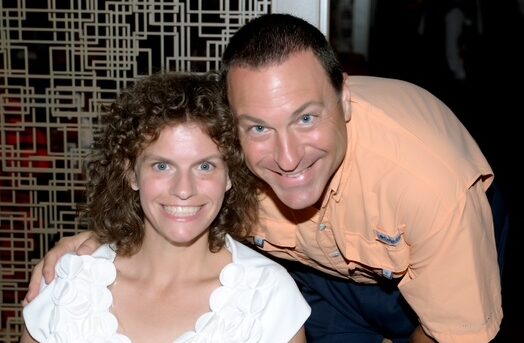
Blake Sauls and his wife Wendy post for a photo during dinner on a cruise. (Courtesy of HD Reach)
In the quiet, not-so-often-seen life of a Huntington’s disease (HD) caregiver, there is a commonality among them that even they may not realize. Even within this quiet corner of the HD community, it is truly a loud and profound aspect of these unsung heroes. That commonality is caregiver burnout, and it all too often shows up without calling first to see if it is a good time to visit.
As an HD caregiver myself, and a caregiver to a nonverbal autistic child, I can tell you firsthand that you deliver the care needed without thinking twice about yourself. You do what you do out of love for someone else, pouring every ounce of your being into their needs, until one day you realize that you are not just adjusting to their diagnosis but holding a fragile world together.
As a spousal caregiver, at first it may seem like small, routine assumptions of duties such as taking over the finances, needing to repeat a statement for the third time, or perhaps even learning to read their facial expressions to determine if it is the best time to speak. However, with Huntington’s disease being described as a relentless combination of Alzheimer’s, ALS, and Parkinson’s disease, that responsibility quickly turns into a full-time, 24-hour job.
Caregiver burnout is connected to actively caring for another person’s needs daily, but within the HD community, it carries a much heavier load. When you care for an HD warrior, it is like trying to put together a 1,000-piece puzzle, always looking for the next piece. One moment, you are trying to manage intense, severe involuntary movements (chorea), which can be a balancing act of finding the right medication and dosage; the next moment, you are gently trying to care for sudden neurological behavioral shifts such as outbursts, confusion, and even depression. These intense aspects of cognitive decline can strain even the strongest of relationships.
What is so unique about HD caregiving is its genetic isolation. Most often, caregivers are looking after a spouse while also watching their children grow up, knowing that they have a 50% chance of carrying the same gene. That can be emotionally draining and debilitating as you fear for your child’s future. Some are even gene positive and are watching their own future unfold right in front of them as they care for a parent. Amid the hustle and bustle of their daily caregiving duties, their own burnout is not just slowly simmering; it is building like a slow-burning brush fire.
Recognizing burnout and making room for support
Most caregivers may easily dismiss the early warning signs. The consistent fatigue that sleep does not seem to touch, forgetful mind, or that short spurt of resentment and agitation over small disruptions may get simply written off as the result of a busy day. However, that busy day tends to repeat itself daily. One of these, which even I am guilty of, is admitting that I cannot do it all, only to feel like I am betraying my spouse, who needs me.
If this sounds like some of the physical or emotional feelings you have, guess what? It is OK to feel those feelings. You are human, and ultimately, you have to take care of yourself too. You cannot pour your heart, soul, and energy into your HD warrior from an empty cup. You must remember that human endurance has a limit. When you reach that limit or begin to burn out, your immune system weakens, your patience runs thin, and, inevitably, the care you provide to your HD warrior suffers.
Being able to successfully carry the load of an HD caregiver requires a balance between running a sprint and self-preservation. One of the first things you can do is have a good-quality support team to help break that isolation. Connect with a local peer support organization; even look at HD caregiver support groups on social media that are specifically for caregivers. They are invaluable resources that can help you just as much as someone personally affected by HD.
Lastly, respite care should be aggressively sought after. Reaching out to family members, home health aides, or even adult day programs is not an admission of failure; it is a medical necessity for you! Know you are invaluable, loved, and an indelible link to the affective care our HD warriors need.
This article was provided by our partner, HD Reach. It has been reviewed by Bionews for accuracy and relevance. The views and opinions expressed are those of the author and do not necessarily reflect the views of Bionews or Huntington’s Disease News.