
New gene-editing approach shows promise in Huntington’s disease mice
Study: Method alters huntingtin protein so it's less prone to forming toxic clumps
Written by |
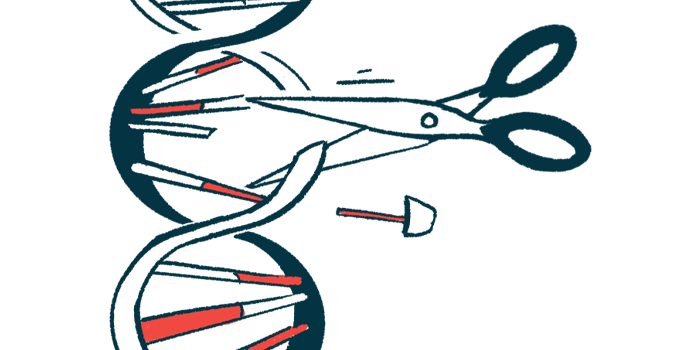
A novel gene-editing approach that’s designed to alter the huntingtin protein so it’s less prone to forming the toxic clumps that drive Huntington’s disease led to better motor function and less brain damage in a mouse model of the disease, a study shows.
“Our results suggest a new way of thinking about treating Huntington’s disease: Instead of inactivating the protein completely or targeting collateral pathways, we introduce a very small edit in the gene that changes how the protein is processed by the cells,” Pablo Perez-Pinera, MD, PhD, the study’s co-senior author at the University of Illinois Urbana-Champaign, said in a university news story. “For Huntington’s disease, this is an exciting development because there is no cure and having multiple possible treatments in the pipeline provides a reason for hope.”
The study, “In vivo CRISPR base editing for treatment of Huntington’s disease,” was published in Nature Biomedical Engineering.
A novel approach
Huntington’s is a progressive neurodegenerative disease caused by mutations in the HTT gene, which provides instructions to make the huntingtin protein. These mutations result in the production of an abnormally long protein that is prone to getting broken up into fragments, which then form toxic clumps within nerve cells. These toxic clumps of mutated protein fragments are thought to help drive the brain damage seen in Huntington’s.
Gene-editing approaches aim to alter the genetic code within living cells. Many studies have explored using gene editing as a potential strategy to treat genetic diseases like Huntington’s.
In most of these studies, the goal is to prevent the mutated protein from being made. But because huntingtin normally plays important roles in nerve cell activity, this may have unintended consequences for brain health.
In this study, researchers took a different approach. Rather than trying to shut down protein production entirely, they aimed to genetically alter cells so they would produce a version of the huntingtin protein that won’t get broken up into fragments.

Treatment reduced amount of mutant huntingtin clumps
A particular region in the huntingtin protein appears to be key for the production of mutated protein fragments. Skipping that region when producing the huntingtin protein can generate alternate versions of the protein that lack the specific site where the mutated protein gets cleaved into fragments.
This may help reduce the formation of toxic, disease-driving clumps, without totally eliminating the normal activity of the huntingtin protein in the brain.
“Our [gene-editing tools] were developed to target the region of [the huntingtin protein] that, when cleaved, can initiate the chain of events that leads to the toxic fragments,” said Thomas Gaj, PhD, the study’s co-senior author at the University of Illinois Urbana-Champaign. “The result is that instead of turning the protein off completely, we alter how the gene is read so that the most damaging protein fragments are not produced.”
After testing out more than 100 variations of gene-editing tools, the researchers zeroed in on one that could efficiently alter a single unit of a cell’s HTT gene to produce a version of the huntingtin protein that lacked the specific cleavage site.
This approach not only shows that [gene-editing technologies] have the potential to be used for Huntington’s disease, it also opens the door to a new kind of potential treatment for other genetic conditions.
The optimal approach was then tested it in a mouse model of Huntington’s. They found that, as designed, the gene-editing treatment, which is delivered to brain cells using a modified, harmless virus, reduced the amount of mutant huntingtin clumps. This reduction in protein clumps was accompanied by less brain shrinkage and better motor function.
“Collectively, these results demonstrate the potential of [gene editing] to mitigate mutant [huntingtin protein] toxicity in [Huntington’s disease],” the researchers wrote.
The team noted that further work is needed to refine this approach and evaluate its safety before it can be tested in humans.
“We’re also interested in adapting this approach to target other regions of the HTT gene to decrease other toxic aspects of the protein,” said Kyrollos Shenouda, one of the study’s authors and a graduate student at the university.
Gaj added that there’s potential for treating conditions beyond Huntington’s.
“This approach not only shows that [gene-editing technologies] have the potential to be used for Huntington’s disease, it also opens the door to a new kind of potential treatment for other genetic conditions,” Gaj said. “This study helps to show that treating genetic diseases can be done without inactivating a gene or directly correcting a mutation. Sometimes, it is possible to implement modifications to change how proteins function and that could be sufficient to protect the body from further damage.”




Amanda Stansfield
what an amazing read. Lost so many family members to HD but this gives me hope for future generations out there. I’m humbled by you all
God bless you all for the brilliant inspirational work that you all do.