The unrealized impact of HD awareness
Sometimes the greatest changes happen quietly
Written by |
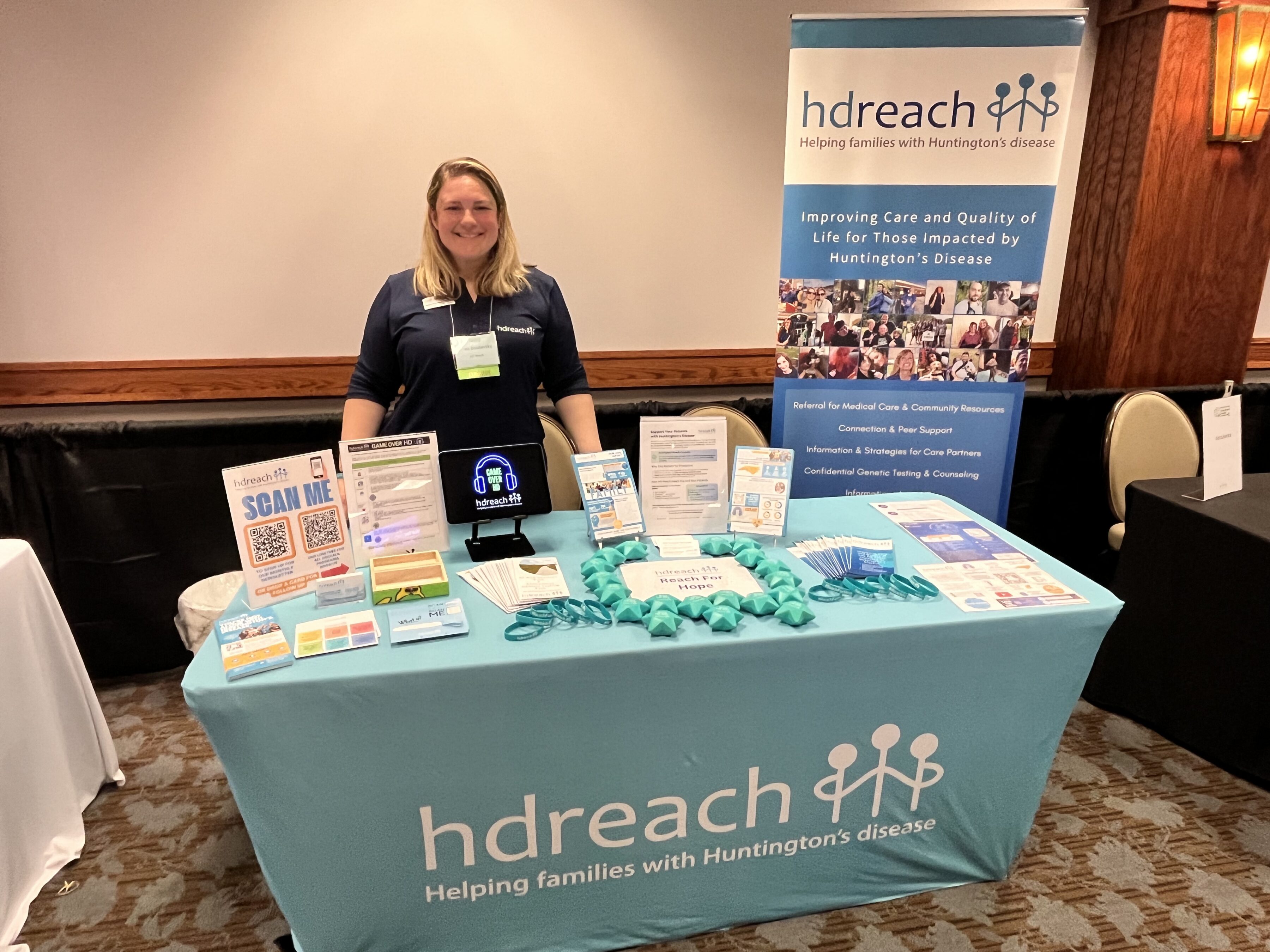
Erika Boulavsky educates the community about Huntington's disease. (Courtesy of HD Reach)
This article was provided by our partner, HD Reach. It has been reviewed by Bionews for accuracy and relevance. The views and opinions expressed are those of the author and do not necessarily reflect the views of Bionews or Huntington’s Disease News.
Raising awareness for Huntington’s disease (HD) can take many forms. It could mean liking and sharing social media posts, wearing HD bracelets and swag, or reaching out to government officials. It might involve having difficult conversations, expanding your own knowledge about the disease, or even sharing your personal story.
For those who enjoy gaming, you can join one of HD Reach’s Game Over Livestream StoryTime sessions. Here, you can tell your HD story live while playing a video game with one of our streamers — a unique and powerful way to connect and spread awareness.
Either way, there is no wrong way to advocate, and it can take many different forms.
It’s a gut feeling, isn’t it? That internal push to step out of your comfort zone and into new territory. For me, that territory was spreading awareness for HD.
From personal fear to community impact
I still remember the first time my sisters roped me into a video for an HDSA NYA fundraiser. I was a nervous wreck and barely said a word. I hated being on camera, but what I hated even more was talking about HD. We were raised not to speak about it openly, a measure to protect our loved ones from genetic discrimination. Frankly, none of us was ready to break that silence.
So, when I was first asked to speak on a genetic testing panel, every fiber of my being screamed, “NO!” But my gut? I knew I had to take this step. It helped me find the courage to say “yes.”
That one uncomfortable “yes” changed everything. Now, I openly talk about HD. I build programs for the HD community that build strength, combat isolation, and bridge critical gaps in support. And in the most beautiful twist of fate, saying “yes” led me to my wife. We met within this community and now navigate the unique challenge of having HD on both sides of our family. Together, we are active caregivers for our loved ones, doing everything we can while standing as strong pillars for each other.
Our amazing neighbor has been a rock for us, especially during a crisis with one of our loved ones. She’s met them, she’s heard our stories, and she’s listened patiently as we’ve described our community and education events.
But one morning, she peeked her head over the fence.
“I don’t know if our phones are listening,” she began, “but I found this girl on TikTok who talks about Huntington’s disease, and I can’t stop watching her videos.”
She told us how she now spends her evenings watching them, captivated and heartbroken by what the disease has done to the creator’s mother. For the first time, she started asking deep, meaningful questions. Something about these videos just “clicked” for her.
It was like she was seeing us and our family’s struggle through new eyes.
She was able to really explore questions around what makes HD so complex and how much we are fighting for a world without it. She asked about government “red tape” when it comes to research, and we were able to fill her in on AMT-130 and the U.S. Food and Drug Administration.
Our neighbor’s choice to share a glimpse of the TikToker’s life through these videos completely transformed our conversations. Suddenly, our interactions were filled with genuine empathy and a deep desire to understand HD.
Now, I’m not suggesting you have to broadcast your life online. Social media has its own set of challenges. But I do encourage you to step outside your comfort zone, even if it feels a little scary at first. You never know the profound impact you could have on those around you — or on the people you have yet to meet.